
Frictionless
Ordering.
For $15–300M businesses running wholesale ordering — unlimited SKUs that load instantly, unlimited team seats on a shared live cart your reps can actually see, and native iOS & Android apps that put the full catalog in every buyer’s pocket.




- Stack review
- Integration
- Pilot
- Go-live
A live pilot runs 4 to 6 weeks.
Complex ordering finally feels simple again.
The cart is where a wholesale order is actually won or lost — and on most platforms it is the one place nobody can see. On RocketX it is live, shared, permanent, and visible to the people who can close it.

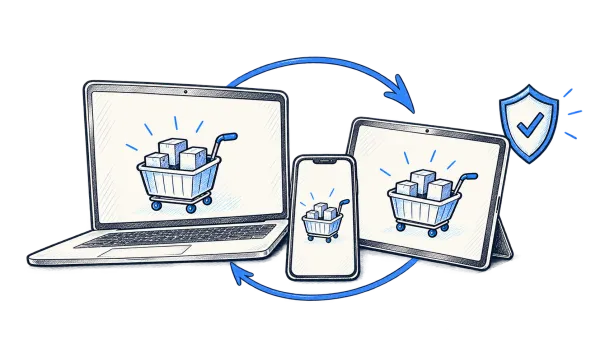
A cart is never lost — not ever.
Every cart is saved server-side the moment it changes and synced across the web shop and the native apps in real time. A buyer starts on the warehouse floor at 7am, adds three lines from a phone at a customer site, and finishes at a desk that evening. Same cart, same state, no re-keying. Nothing depends on a browser session staying alive.

Your rep can actually see the cart.
On most platforms a customer’s half-built order is a black hole: you find out it existed when it never becomes an order. Your reps see live carts as they are built — what is in them, what has stalled, what has sat idle for two days — and can open one, add the right line, fix a quantity, or call before it goes cold.
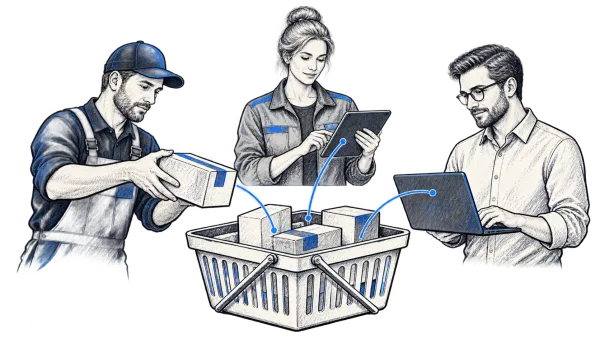
The whole buying team builds one order.
Gartner puts a complex B2B purchase in the hands of six to ten people. They can all work the same cart at once — warehouse adds consumables, production adds parts, the buyer approves — with every change attributed and timestamped. No emailed spreadsheets, no one person retyping everyone else’s list.
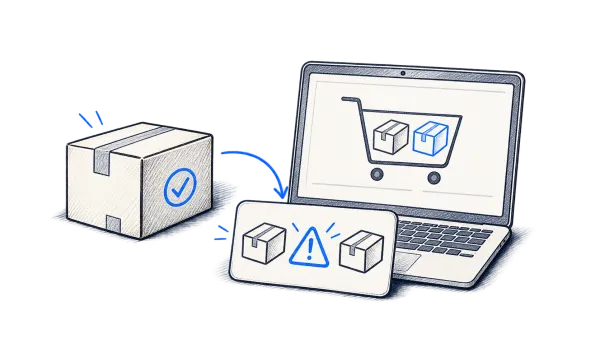
It catches the order you were about to duplicate.
The cart knows what the account already bought. If a colleague at the same customer ordered the same SKU last week, it says so before the order is submitted — who ordered it, how many, when it landed. That is a return that never happens, and returns are the most expensive transaction in distribution.
Sources: Baymard Institute, average documented cart-abandonment rate across 50 studies (2006–2025); this is an all-ecommerce figure, not B2B-specific. Gartner on the size of the buying group for a complex B2B purchase. Return-handling effort per the B2B E-commerce Association’s distribution benchmarks. Figures describe the market, not guaranteed outcomes.
How RocketX Works
Every plan runs on the same infrastructure. There is no slower tier for smaller customers, and nobody pays extra for search that works.
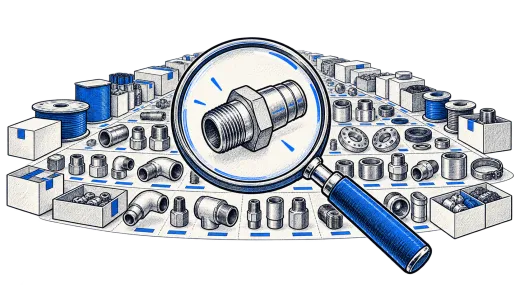
Unlimited SKUs, sub-second search
Whether your catalogue runs to eight hundred SKUs or eight million, filter and order in milliseconds — and never pay by the SKU. Performance other platforms simply don’t match at scale.

Ultra-Fast Native iOS & Android Apps
Lightning-fast native mobile apps built specifically for B2B ordering. No browser lag — smooth on phones and tablets.
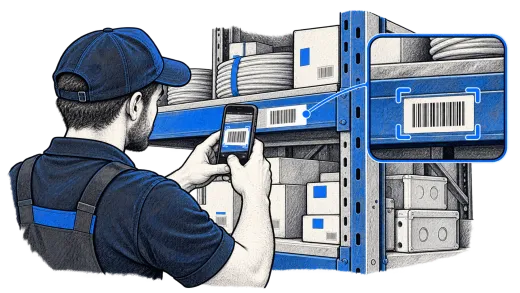
Your Field Rep in the Buyer’s Pocket
Barcode scanning, one-tap reordering, real-time pricing, and instant availability checks in every buyer’s phone.

Real-Time Team Collaboration on Carts
Multiple team members work the same cart simultaneously — every action logged with who did what, and when.
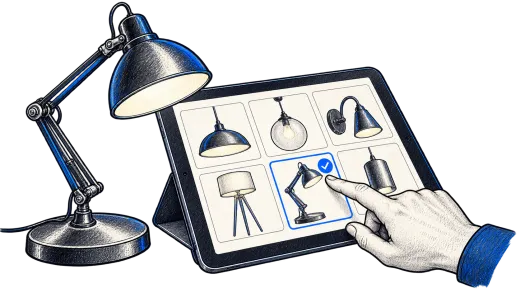
Order Directly from PDFs
Share videos, brochures, and existing catalogs. Our AI scans your PDFs so buyers can order straight from them.

Unlimited Seats & Users
Every employee, sales rep, and authorized customer gets full access — no per-user fees or restrictions.

Customer-Specific Pricing & Contracts
Each buyer automatically sees their exact negotiated prices, volume tiers, and contract terms.
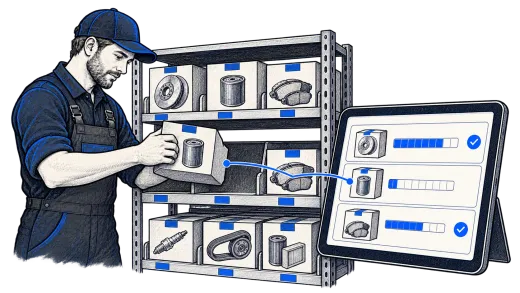
Real-Time Inventory
Live stock levels and availability across multiple warehouses — no surprises, no backorders.

Bulk Ordering & Quick Reorder
CSV uploads, saved templates, favorites lists, and one-click reordering from past invoices.

Seamless ERP & CRM Integrations
Deep bidirectional sync with NetSuite, SAP, Microsoft Dynamics, Epicor, and other major systems.

Wholesale First, Consumer Channel Too
Built around wholesale ordering. If you also sell direct to consumers, that channel runs from the same catalogue and the same ERP feed — not a second platform with a second set of product data to keep in step.
| Qty | Part no. | Description | Pack | Stock | Your price |
|---|---|---|---|---|---|
RocketX does not replace your ERP — it sits in front of it. Product data, customer-specific pricing and live stock flow out; carts, orders and approvals flow back.
Nothing gets switched off
The same is true one step further out: RocketX runs alongside the web shop you already have. Both can serve customers at the same time, both write into the same ERP, and you decide later — or never — whether the old one retires.

B2B buying has moved online. Your ordering experience decides who wins.
Your catalog belongs on the home screen — not in a browser tab.
A responsive website and a native app are not the same product. One waits to be found. The other sits in your buyer’s pocket and asks for the reorder.
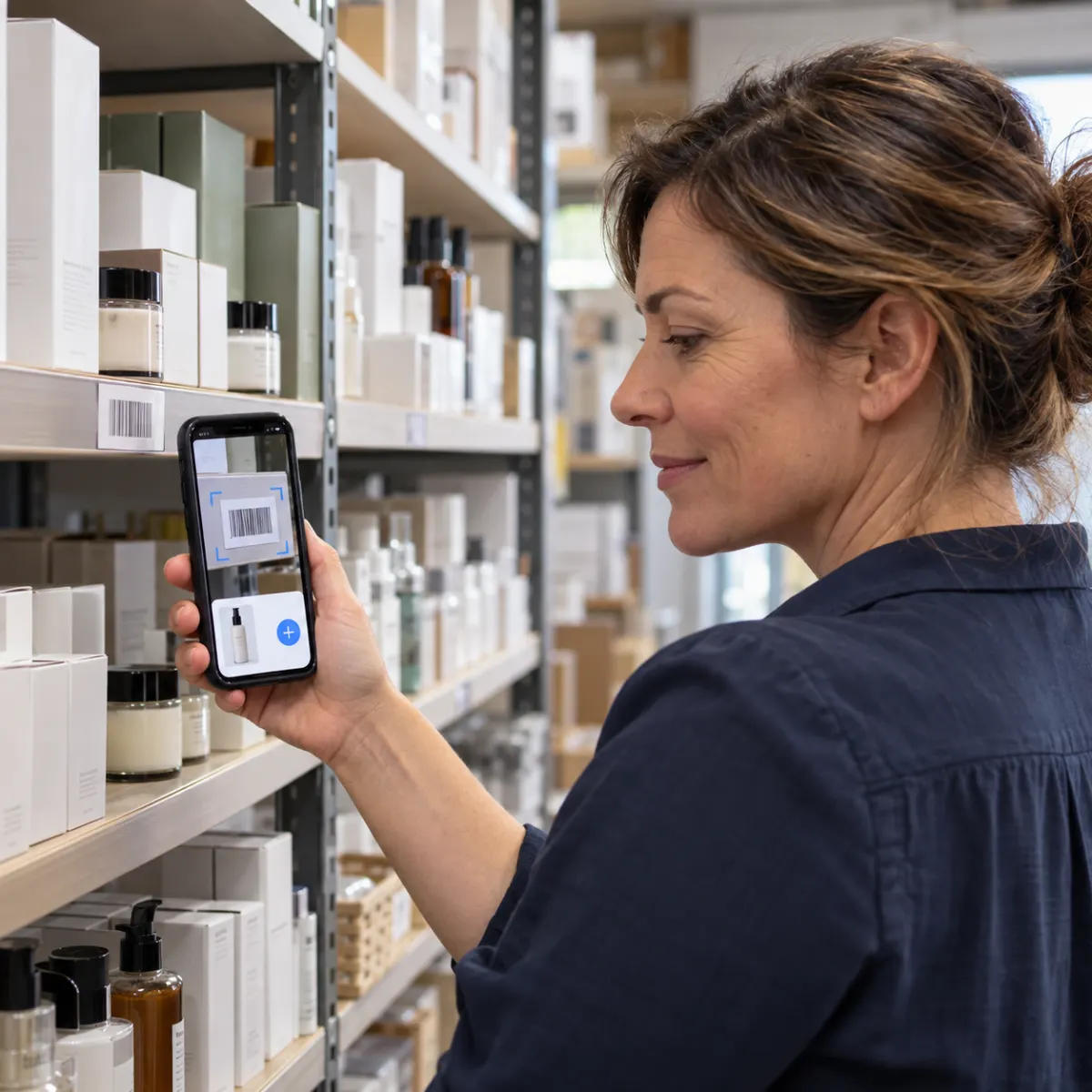

Reordering is a habit, not a search.
Most B2B orders are repeat orders. A browser makes your buyer find a bookmark, load a site, and log in every single time. An app is one tap from the home screen, already signed in. You remove that friction from every reorder for the life of the account.

You get a permanent place on the buyer’s phone.
Your icon sits on the home screen next to their bank and their email. Competitors have to be searched for and rediscovered. That default position is worth more than any single campaign — and it compounds every week it stays there.

Push brings buyers back without a sales call.
Back-in-stock alerts, contract renewals, price changes, and reorder reminders reach the buyer directly. Airship finds that users who opt into push retain at two to three times the rate of those who don’t. Email gets filtered; a push lands.

The phone is where the work actually happens.
Buyers order from warehouse aisles, loading docks, job sites, and trade-show floors — not from a desk. Native access to the camera means barcode scanning and instant reorder from a shelf label. A browser tab cannot reach that hardware reliably.

It keeps working when the signal doesn’t.
Steel-walled warehouses, basements, and rural delivery routes kill mobile reception. A native app holds the catalog, pricing, and cart locally and syncs when the connection returns. A web cart in that moment is simply a lost order.
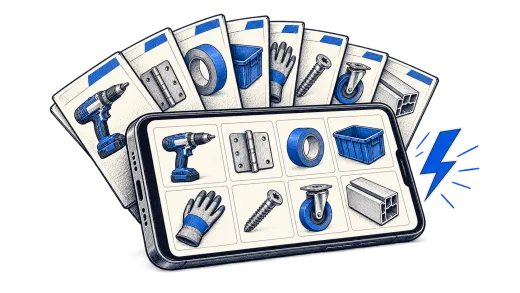
Your whole catalogue stays instant.
Native apps cache and index locally instead of making a network round trip on every keystroke. At the catalogue sizes where web storefronts start to stall, search stays sub-second — which is exactly when a buyer decides whether to keep going or call somebody.
Responsive website only
- Buyer must find the URL and log in each time
- No reliable push channel to prompt a reorder
- Camera and barcode access limited or unavailable
- Dead in the water without a connection
- Competes for the small share of time spent in a browser
RocketX native apps
- One tap from the home screen, always signed in
- Push alerts for stock, pricing, and reorder timing
- Barcode scanning and reorder straight from a shelf label
- Full catalog cached offline, syncs when signal returns
- A permanent position on the buyer’s home screen
Sources: Sensor Tower, State of Mobile 2026 (share of smartphone time outside the browser); McKinsey B2B Pulse, ninth annual survey of 3,942 B2B decision makers across 13 countries; Boston Consulting Group with Google, “Mobile Marketing and the New B2B Buyer” (2017), for mobile’s share of B2B revenue and time-to-purchase; Airship retention benchmarks for push opt-in. Time-spent figures cover all smartphone use, not B2B ordering specifically.
Wholesalers, distributors and manufacturers keep telling us the same three things.

Faster Ordering
Across our live customers, buyers and field reps complete orders in at least a third less time. Search stays under a second — a hundred items or a million. One tap adds an item to the shared cart, without opening the product page.

Team Adoption
Unlimited seats: account managers, colleagues and store owners work in the same cart and see every change as it happens. The whole team uses the platform instead of working around it.

Manual Catalog Work
Our AI scans your existing PDFs and brochures so buyers can order directly — no manual data entry.
“RocketX didn’t just improve our ordering — it removed the friction that was slowing our entire business down.”
Traditional platforms weren’t built for this.
| Platform | Platform fees | Implementation & hidden costs |
|---|---|---|
| Shopify Plus | $2,300–$2,500/mo; switches to a ~0.25% revenue fee above ~$1M monthly order volume, capped at $40k/mo | Real running cost typically $4k–$25k/mo with apps and agency work; deep B2B needs heavy custom development |
| Adobe Commerce | License ~$22k–$190k+/yr, scaled to your order volume | Mid-market B2B builds ~$100k–$250k to implement; $122k–$450k/yr to run; 4–8+ months to launch |
| BigCommerce + B2B Edition | Custom, typically $1k–$3k+/mo plus the B2B add-on | B2B Edition implementations commonly quoted at $150k–$400k |
| OroCommerce Enterprise | License $45k–$250k/yr by order-volume band | Plus implementation and integration services |
| RocketX | $6k–$12k/mo flat — no percentage of sales, ever | $40k integration waived on annual plans; billing starts only at go-live; native apps and unlimited seats included |
Detailed, sourced comparisons: Shopify B2B Pepperi Sana Commerce
What we’re seeing in B2B commerce.
Field notes from our work with wholesalers and distributors, published on LinkedIn.

Nobody Owns Your ERP Data

Your Buyers Can’t Find the Thing You Sell

Most High-Volume Wholesalers S#ck At Product Marketing

When the Website Shows Yesterday’s Price, You Lose Twice

Your Inventory Data Is Probably Wrong — and Your Boss Probably Knows It

Self-Service Isn’t Deflection — It’s What Buyers Actually Want. Stop Ruining It.

Why 3 in 4 B2B Buyers Are Ready to Leave — and It Isn’t About Price
Flat fee. Never a percentage.
One fee covers the platform: unlimited SKUs and unlimited seats at full speed, native apps, standard integrations, and ongoing updates. No per-SKU fee and no per-user fee either.

Run the one-percent test on your own numbers.
A one-percent fee costs 6.5× what RocketX does. The rest is detail.
Same platform, same speed, same team on all three. What rises is capacity: concurrency and response times. Custom features — a punchout catalogue, say — are built in development blocks at $15,000 each: requirements through deploy, plus 30 days of support. Small features can share a block; a large one can take several.
You only pay when it works.
Billing starts only at go-live — not at contract signature. You pay nothing until the platform is live and delivering value. And if the pilot misses the agreed measures, you walk away owing nothing.
- 10% discount on annual commitment
- Full $40,000 integration fee waived
- Billing starts at go-live, not signature
- 4–6 week pilot with agreed measures — miss them, and you owe nothing
- Runs alongside your existing web shop — nothing is switched off

It starts with a stack review: your catalogue, your ERP, and the measures the pilot has to hit.
The questions that come before a signature.
Does the platform fee change as our order volume grows?
No. The platform fee is a flat monthly amount and never a percentage of your order volume. There are no per-SKU fees and no per-user fees. Plans are banded by company revenue, not by how busy a given month was.
Can our reps see a customer’s cart before it becomes an order?
Yes. Your reps see carts live as they are built: what is in them, what has stalled, what has sat idle for days. They can add the missing line, correct a quantity, or call before it goes cold.
Does a cart survive a closed browser, a flat battery, a change of device?
Yes. Carts persist server-side and sync in real time across the web shop and the native apps. Nothing depends on a browser session staying alive.
Can several people at the same customer build one order together?
Yes. Several people work the same cart at once, and every change is attributed and timestamped.
Will the system warn us when the same SKU was already ordered recently?
Yes. The cart checks what the account already bought and flags a recent duplicate before the order is submitted, showing who ordered it, how many, and when it arrived.
Are field reps and our customers’ staff charged as seats?
No. Seats and users are unlimited on every plan. There are no per-user charges for employees, field reps, or authorised staff at your customers.
What is the search response time at our actual catalog size, not a demo catalog?
Search stays under a second whether the catalogue runs to hundreds of SKUs or millions. It is measured on your own catalogue during the pilot, not on a demo set.
Are the mobile apps native, or a website in an app shell?
Native iOS and Android, purpose-built for B2B ordering rather than a website wrapped in a shell. Barcode scanning and offline access are included.
Does the catalog work when a buyer has no signal?
Yes. The catalogue, pricing, cart, and your brochures and product video are held locally and sync when the connection returns.
When does billing start — at signature or at go-live?
At go-live. Integration is waived on annual plans, and a 30 to 45 day pilot with agreed measures comes before any longer commitment. If the pilot misses those measures, you walk away owing nothing.
Thirty seconds each.
Stop making your buyers wrestle with slow, clunky carts.
Four to six weeks on your own catalogue and ERP, against measures you set before we start.
No form, no email required. Take the one-pager if you have two minutes, or the full 14 pages if you are building the case.